
About the Grimshaw-Gudewicz Art Gallery
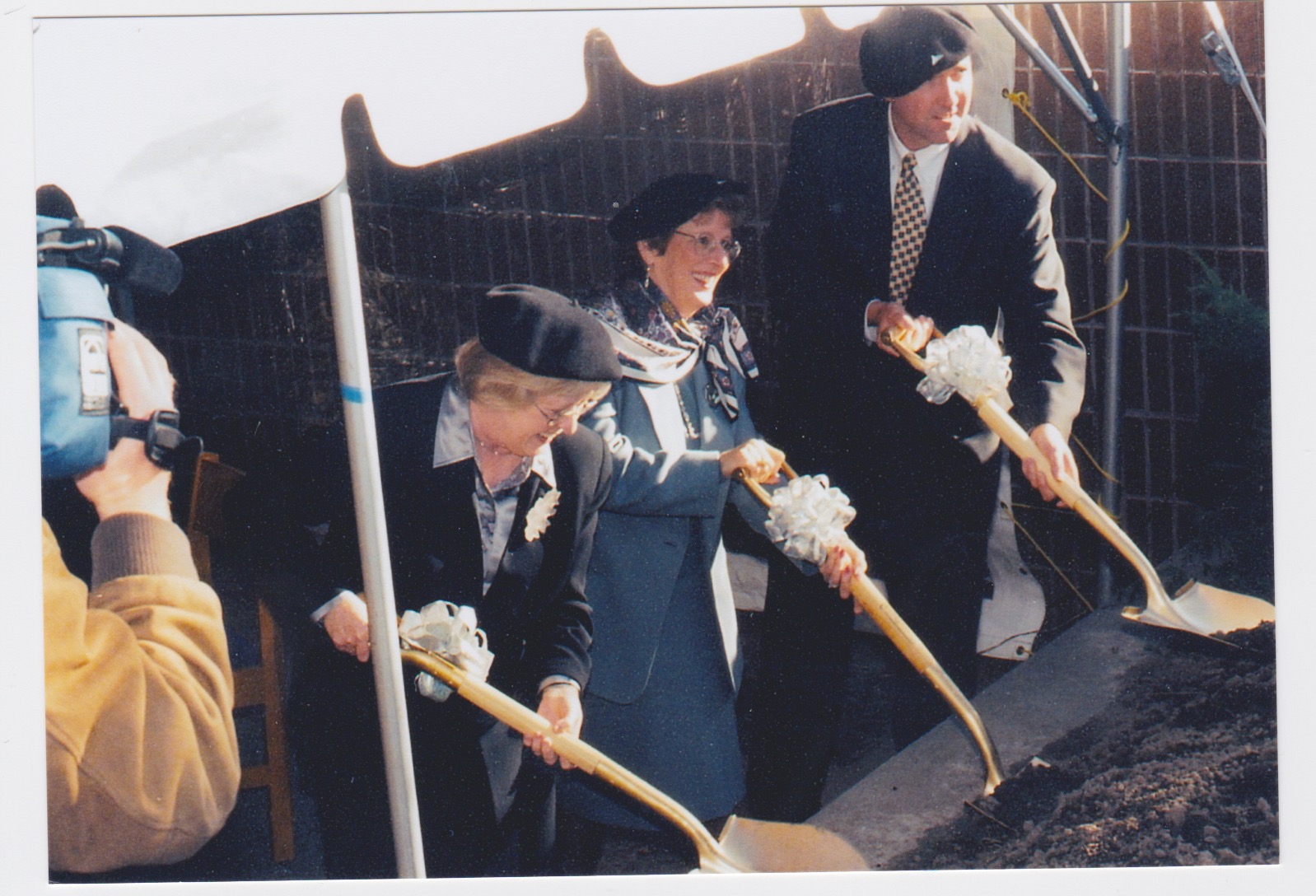 The Grimshaw-Gudewicz Art Gallery first opened its doors to the public in October
2000. Designed by the architecture firm Handlin, Garrahan, and Associates, it was
the result of a two-year campaign led by the Bristol Community College Foundation,
which raised more than $500,000. Those funds were matched by public funds through
the assistance of the Division of Capital Asset Management and Maintenance, an agency
of the Commonwealth of Massachusetts.
The Grimshaw-Gudewicz Art Gallery first opened its doors to the public in October
2000. Designed by the architecture firm Handlin, Garrahan, and Associates, it was
the result of a two-year campaign led by the Bristol Community College Foundation,
which raised more than $500,000. Those funds were matched by public funds through
the assistance of the Division of Capital Asset Management and Maintenance, an agency
of the Commonwealth of Massachusetts.
Under director Kathleen Hancock, the Gallery functions as a forum to present ideas about art and art-making. Each semester for the past twenty-six years, faculty from across the college use the Gallery as a teaching and learning tool.
Although the inaugural exhibition, Selected Works from Bristol Community College’s
Permanent Art Collection, was already on the schedule for October, the Gallery had
not officially opened its doors to the public.
While the main exhibit hall was completed, some elements of the reception area and
the courtyard were still under construction – it would take the rest of the academic
year for them to be finished. That year my desk was a folding table, and I stored
tools and other Gallery furniture behind portable office partitions in the reception
area. I felt a little like the Wizard of Oz then when I asked visitors to ‘pay no
attention’ to what was behind the office partitions. I was incredibly busy in those
next few seasons working with my colleagues to refine the mission, establish the structure,
develop meaningful programming, and make sure that we had all the necessary tools
and equipment in place to support the installation process.
The Gallery’s role has always been to be a forum to present ideas about art and art-making.
My approach has always been to use exhibitions to provide opportunities for students
and the community to participate in the creative process. Over the years, I have had
the pleasure of meeting and working with many extraordinary people. And together we
have created many memorable exhibitions.
Director of the Grimshaw-Gudewicz Art Gallery – Kathleen Hancock
The Beginnings of Art Education at Bristol Community College
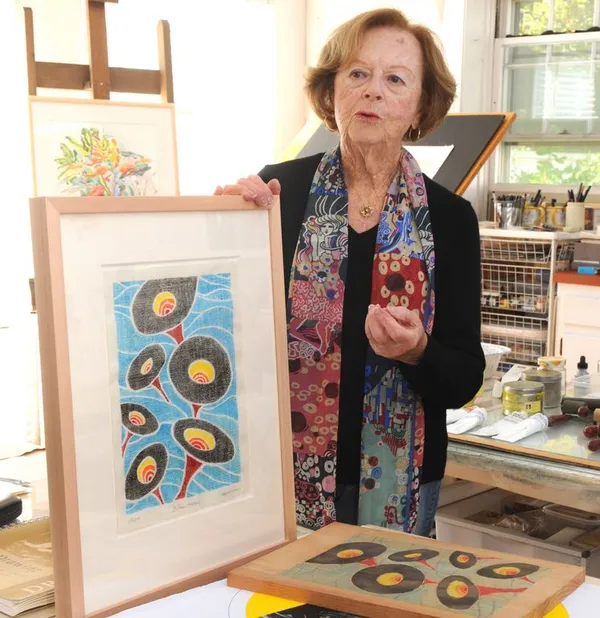 When artist-teacher Marion Wilner was appointed to the faculty in 1966, the college’s
first year of operation, art was not a high priority in the curriculum. The study
of art was viewed perhaps as a luxury in a community that needed jobs and a workforce
with practical skills. But this narrow outlook did not prevail for long, for Marion
Wilner brought to the college not only her great skill and dedication as a teacher,
but also a deep understanding of the potential of art as a focus of study and career
preparation. She led us to recognize that artistic interests and talents were to be
found across the spectrum of social and economic class and that Bristol’s mission
could and should accommodate these interest and talents. Thanks to her vision and
enthusiasm, Bristol’s art program evolved over time with an Art Transfer program officially
recognized in 1980. The addition of commercial art eventually led to the full array
of courses in graphic arts, electronic imaging, and web design Bristol offers today.
When artist-teacher Marion Wilner was appointed to the faculty in 1966, the college’s
first year of operation, art was not a high priority in the curriculum. The study
of art was viewed perhaps as a luxury in a community that needed jobs and a workforce
with practical skills. But this narrow outlook did not prevail for long, for Marion
Wilner brought to the college not only her great skill and dedication as a teacher,
but also a deep understanding of the potential of art as a focus of study and career
preparation. She led us to recognize that artistic interests and talents were to be
found across the spectrum of social and economic class and that Bristol’s mission
could and should accommodate these interest and talents. Thanks to her vision and
enthusiasm, Bristol’s art program evolved over time with an Art Transfer program officially
recognized in 1980. The addition of commercial art eventually led to the full array
of courses in graphic arts, electronic imaging, and web design Bristol offers today.